FREE CREDIT SCORE

BEST INTEREST RATES
FREE CREDIT SCORE
BEST INTEREST RATES
In 2026, having a strong CIBIL score is essential. It plays a big role in whether you get approved for a home loan, car loan, personal loan, or credit card, and it also affects the interest rates you pay.
The good news is that improving your CIBIL score doesn’t always take years. By focusing on the right steps and avoiding common mistakes, you can see results in just a few months.
This guide covers what really affects your CIBIL score in 2026 and how you can improve it quickly and for the long term.
Banks and NBFCs now rely more on data than ever before. Because of stricter risk checks and lending rules, your CIBIL score is usually the first thing checked when you apply for a loan.
A higher CIBIL score can help you:
A low score, however, can lead to loan rejections or higher EMIs. Try using a loan EMI calculator to see how even a small change in interest rate can affect your monthly payments over time.
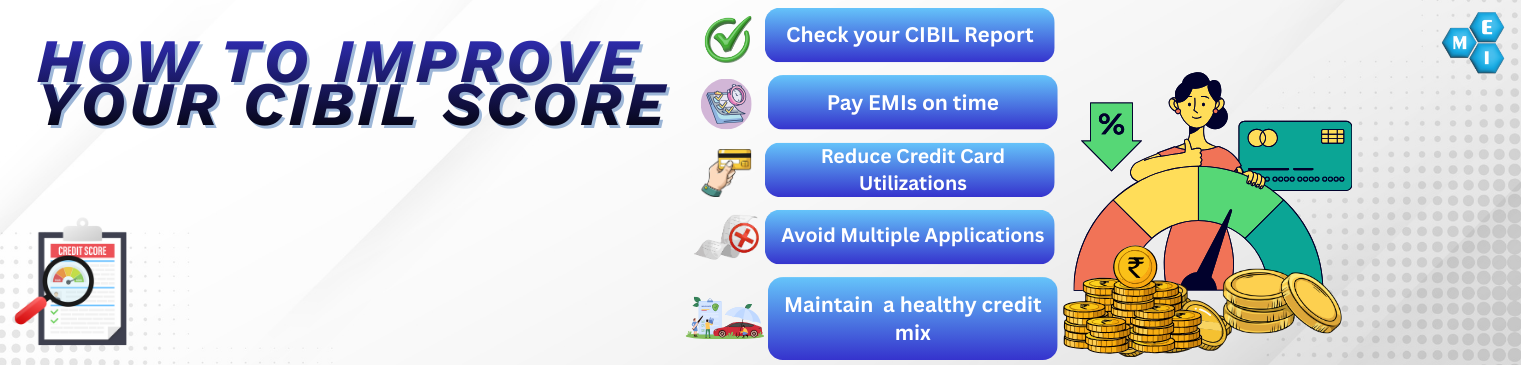
Before you try to improve your score, take a close look at your CIBIL credit report. Many people only check the score and miss errors in the report that can quietly lower it.
Check for:
If you spot any mistakes, report them right away using CIBIL’s official platform. Correcting errors can sometimes boost your score in just a few weeks.
Your payment history is the most important factor in your CIBIL score. In 2026, even a single missed or late payment can hurt your score, especially if it happened recently.
To stay consistent:
Credit utilisation means how much of your total credit limit you are using. It’s best to keep this below 30 percent.
For example, if your card limit is ₹1,00,000, try to use less than ₹30,000 to ₹40,000.
To improve utilisation faster:
Lowering your utilisation can improve your score in just one or two billing cycles.
Every time you apply for a loan or credit card, it creates a hard inquiry on your credit report. Too many inquiries in a short time can make you seem eager for credit for your score:
Tools like a personal loan EMI calculator or home loan EMI calculator can help you check what you can afford before you apply, so you avoid unnecessary inquiries.
It might seem smart to close old credit cards, but doing so can shorten your credit history.
Older accounts:
Unless a card charges high annual fees or has bad terms, keeping it open and using it occasionally can help your CIBIL score.
Paying off small loans or overdue accounts can improve your credit profile. But settling a loan should only be your last option.
A “settled” status is viewed negatively compared to “closed” or “paid in full”.
If possible:
This helps your credit health in the long run and makes it easier to get loans in the future.
Having both secured and unsecured credit can make your credit profile stronger over time.
Examples include:
Sudden spikes in borrowing or long periods of inactivity can both affect your score.
In 2026, lenders value consistency more than aggressive borrowing. Moderate usage, timely repayments, and predictable behaviour help build trust and improve scores steadily.
If you take the right steps, here’s what you can usually expect:
Improving your CIBIL score in 2026 is achievable with focus and consistency. Timely payments, low credit utilisation, fewer applications, and regular credit report checks make the biggest difference.
A healthy CIBIL score not only increases approval chances but also lowers your EMI burden over time. Use EMI calculators to plan better, borrow wisely, and let your credit profile work in your favour when it matters most.